Stucco vs Plaster: Which is Right For Your Walls
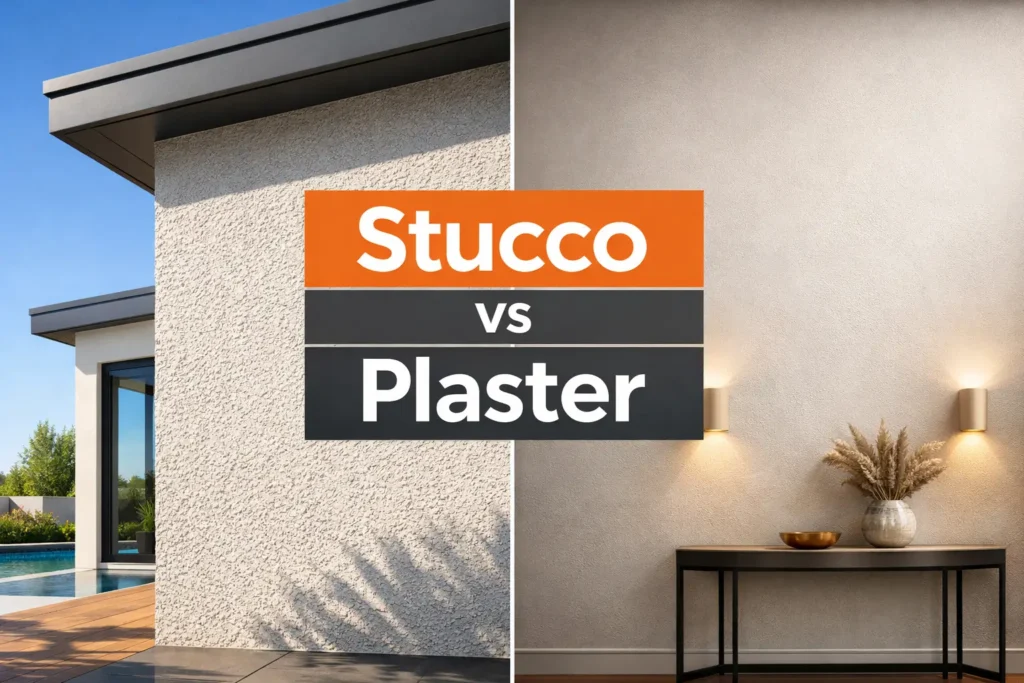
Stucco vs plaster is a classic debate when the topic is giving your home walls the perfect finish. Many homeowners, builders, and even designers get confused between these two popular surfaces.
Stucco and plaster might seem similar at first glance, but their applications and benefits are totally different. Stucco has been known for its resilient exterior finish, while plaster has been trusted for its elegant interior look.
If you are searching “Is stucco or plaster better for my situation?” Then read this blog to clear all your confusion. Learn how cost, appearance, and climate affect your choice.

What is Stucco?
Stucco is a durable and cement-based wall finish that is mainly used on exterior surfaces of buildings. It creates strong and textured surfaces, making it ideal for outside walls and seasonal changes.
Stucco is made with a mixture of Portland cement, sand, lime, and water. A thick paste is generated and then applied in layers onto the walls.
The following are some of the areas where you will see stucco:
- Home exteriors
- Facades and trim details
- Excellent walls and architectural features
- Sometimes inside for feature walls or fireplaces
What is Plaster?
Plaster is a smooth wall and ceiling finish that offers a polished surface when applied. It is made by a mixture of gypsum, lime, sand, and water. Plaster is usually used for interior spaces where a clean finish is required.
The following are the different types of plasters available in the market:
Gypsum plaster: Sticks well to the drywall and is commonly used for modern interiors.
Lime plaster: Traditional lime plaster works well in historic projects or specific restorations.
Cement plaster: Strong plaster option completely used for durable exterior walls.
Need Professional Stucco Repair or Remediation?
Get expert stucco inspection, repair, and remediation services you can trust. Serving homeowners with quality workmanship and long-lasting results.
Get a Free Consultation
Need Professional Stucco Repair or Remediation?
Get expert stucco inspection, repair, and remediation services you can trust. Serving homeowners with quality workmanship and long-lasting results.
Get a Free ConsultationWhat are the Key Differences Between Stucco and Plaster?
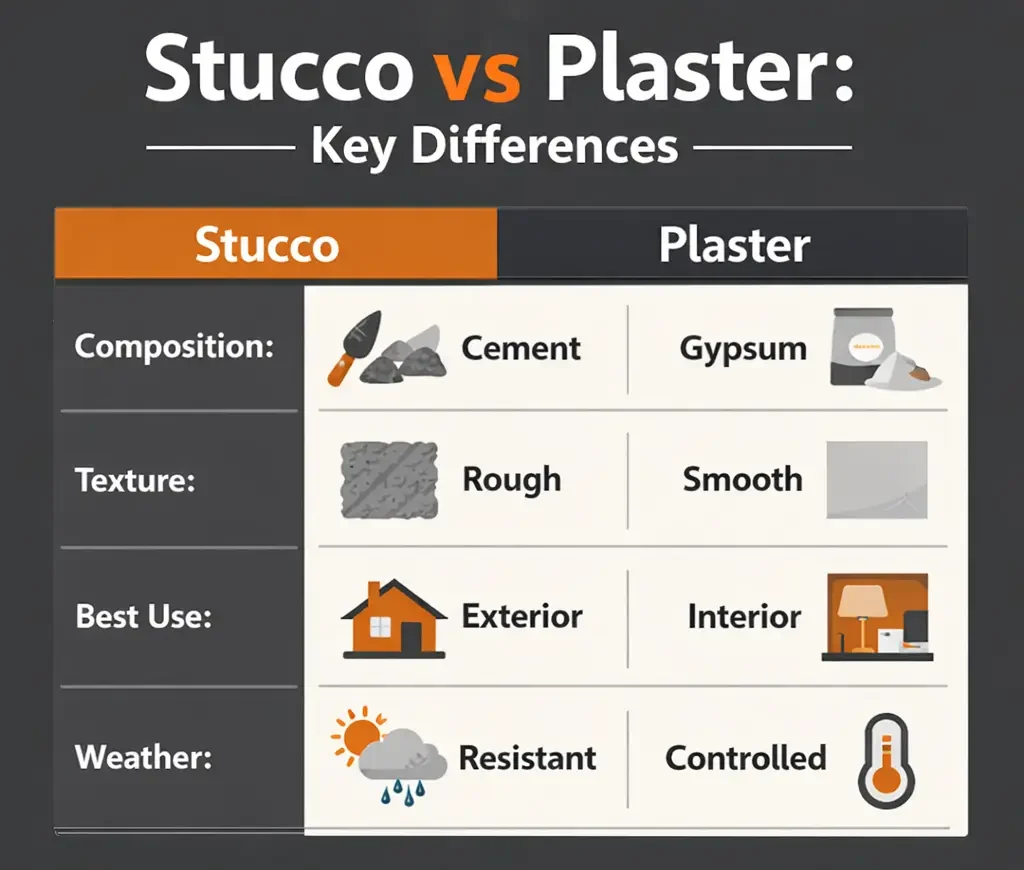
Both stucco and plaster start as a mixture of sand, water, and lime, but their texture and best use cases are totally different from each other.
| Aspect | Stucco | Plaster |
| Composition | Cement, sand, lime (sometimes acrylics) | Gypsum, lime, and sand |
| Texture | Rough and textured | Smooth and polished |
| Best Use | Exterior walls and some interiors | Interior walls and ceilings |
| Application | Multi-coat over lath and harden rock-solid | Thin layers, set quickly |
| Environment Fit | Handles weather and humidity | Best in dry and controlled spaces |
Stucco vs Plaster Cost: Which is More Affordable?
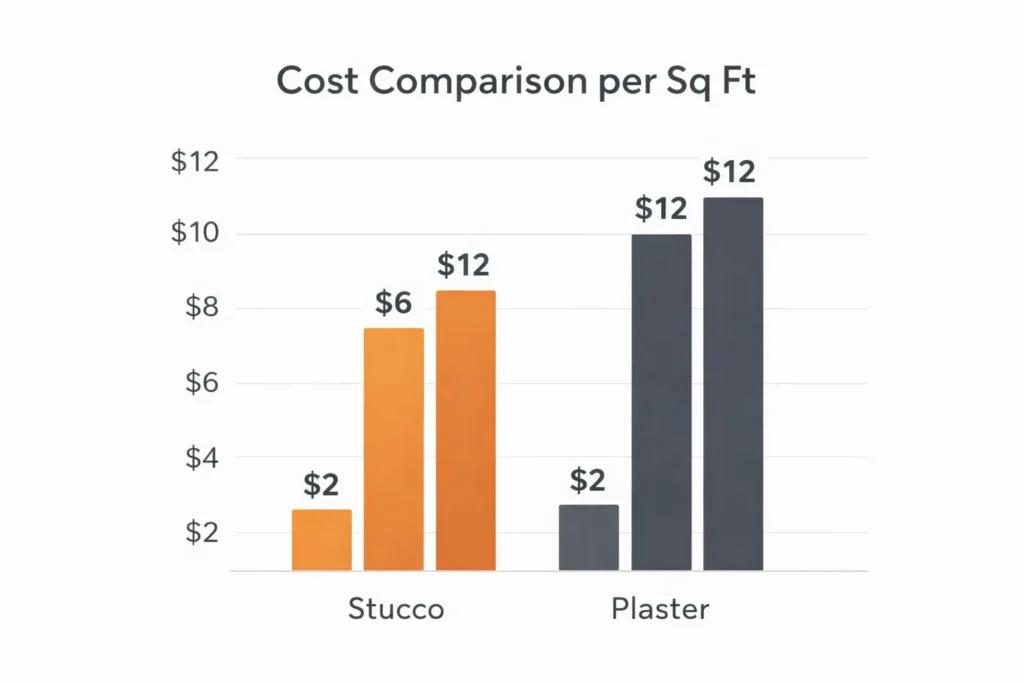
Examining the cost of both stucco and plaster is important before starting your project. Plaster is considered more affordable per square foot. On the other hand, stucco may cost more but is worth the investment due to its durable and weather-resistant finish.
The following is a quick cost comparison:
Stucco Cost
Traditional stucco: $6 – $9 per sq ft
Synthetic/acrylic or EIFS systems: $8 – $12+ per square ft
Total home exterior stucco: $7 – $9 per sq ft
Plaster Cost
Gypsum or basic plaster: Around $2 – $10 per sq ft
Speciality finishes ( veneer or ornate plaster): $7 – $12+ per sq ft
Why Is Stucco Worth The Extra Cost?
Stucco can cost you more, but it can serve as a long-term investment for your building. In many cases, plaster fails to hold up outdoors. There are some of the reasons why stucco is a better choice to spend money:
- Better weather resistance and fewer repairs.
- Energy efficiency and lower heating/cooling costs.
- Longer lifespan when properly installed.
Is Stucco or Plaster More Durable?
The real question lies in which materials hold up better over time? The challenging climate of Philadelphia requires a more durable solution.
The short answer is that stucco is durable for exterior application, while plaster is suitable indoors, as it cannot face extreme weather. According to the Minnesota Lath & Plaster Bureau, stucco demonstrates strong water resistance in laboratory tests simulating rain and driven moisture.
Stucco For Outdoor Durability
- Can last up to 50 to 80+ years if maintained well.
- Excels in resisting harsh weather.
Plaster Last Indoor
- Great for smooth interior finishes.
- Can falter when exposed to humidity.
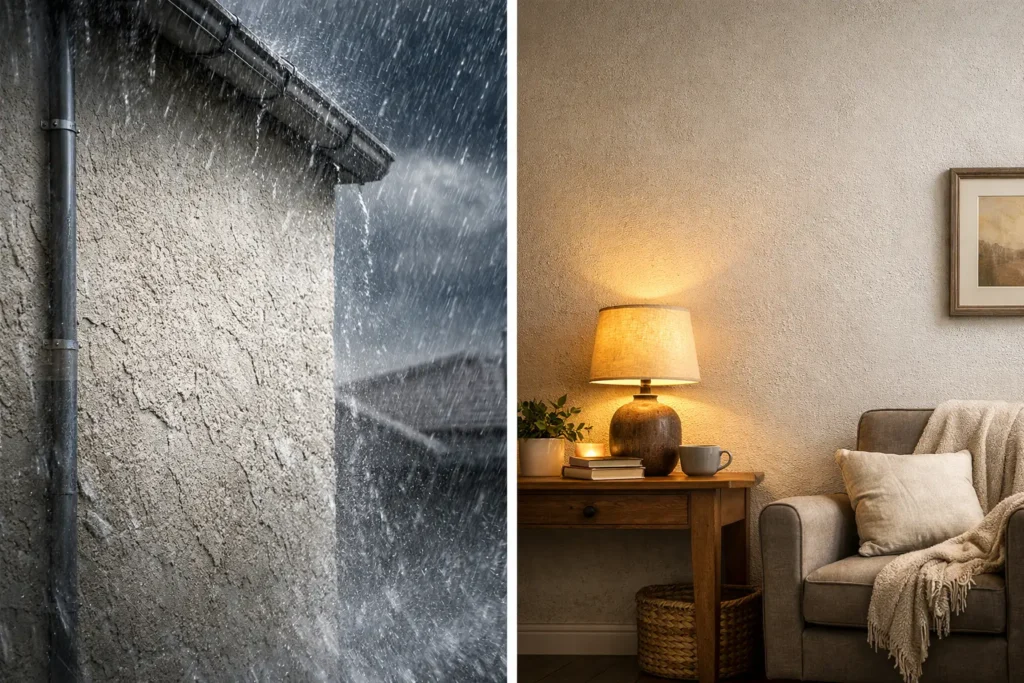
Stucco vs Plaster for Interior
Plaster is the most preferred choice for interior walls because of its flexibility and refined appearance. The following are the top benefits of plaster for indoor walls.
- Smooth and polished finish
- Highly customisable styles
- Great acoustic performance
- Paints and finishes beautifully
Stucco vs Plaster for Exterior
Stucco is considered to go to exterior finish due to its toughness and aesthetic flexibility. The following are some top reasons why stucco is ideal for outdoors:
- Exceptional durability
- Whether resistance
- Fire and pest protection
- Energy-saving qualities
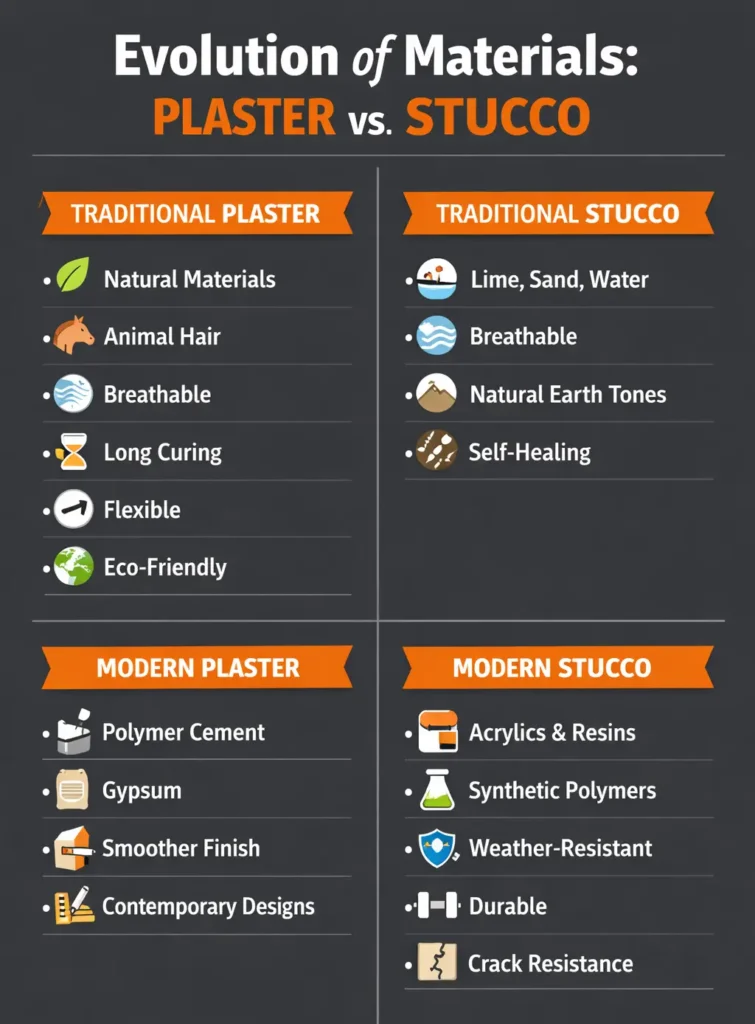
Traditional Plaster vs Modern Stucco: Evolution of Materials
Both plaster and stucco have seen evolution over the years in terms of strength, performance, and flexibility.
Traditional Plaster
Plaster was made from natural materials and sometimes reinforced with organic fibres such as animal hair. It was known for its ability to regulate moisture from the start. The following are some reasons why plaster remains popular for years in ancient and heritage buildings.
Breathable: The mixture of natural materials made it great for older structures with solid masonry.
Long curing time: Plaster can take weeks or even months to get fully prepared.
Flexible: Provides a repairable mixture with compatible materials.
Eco-friendly: It is made from minimal processing, which makes it energy efficient.
Modern Plaster
Today, plaster is no longer a mixture of natural materials but is made with polymer cement and gypsum. It is better in terms of resistance and providing smoother finishes. Now, this mixture provides contemporary designs that support a wide range of interior aesthetics.
Traditional Stucco
Lime, sand, and water, these three materials were used to make a renowned mixture of today, stucco. Stucco was widely used on building exteriors centuries ago. Traditional stucco has the following features:
Breathable finish: Helps prevent trapped moisture
Natural earth tone: Offers are the pallet from mineral pigments
Self-healing: Excellent crack resistance due to lime carbonation
Modern Stucco
Several additions have been made to modern stucco, such as acrylics, resins, and synthetic polymers, to make it more weather-resistant and durable. Modern stucco offers better crack resistance, but professional stucco installation is also necessary for better performance.
Is Stucco or Plaster Better for Your Project?
For Philadelphia homes, stucco is considered ideal according to the environment. The following are some of the needs to consider while selecting:
Location: Exterior? Go stucco. Interior? Plaster.
Climate: Humid or cold? Stucco’s durability wins.
Budget: Plaster for affordable interiors and stucco for long-term savings
Style: Stucco for a textured rustic vibe and plaster for a smooth finish.
Real Life Examples and Homeowner Insights
We at Alston Stucco installed modern stucco in Philadelphia two years ago. Our client reported that it still looks new after two years and offers excellent durability against wear.
A Reddit user r/Homeprovment wrote plaster is a better sound barrier, but its repair is more expensive and repetitive. Many other users defended stucco for having better resistance in the comment section.
Final Verdict
The answer is simple. Stucco is an excellent option for the exterior, while plaster works well with the interior. The inside tip is to always look for your requirements, budget, and long-term benefits when you are choosing a finish for your home.