
5 Signs You Need Stucco Repair and How to Handle It

A small crack in your stucco might not seem like a priority. Many homeowners assume it’s simply part of an aging home and decide to deal with it later. Sometimes that’s true, but not always.
Stucco is designed to protect your home from moisture and changing weather. When it’s damaged, even a small opening can allow water to reach the materials behind the surface, leading to more expensive repairs if the problem is ignored.
Knowing what to look for can save both time and money. In this guide, you’ll learn five common warning signs that your home may need stucco repair, what causes them, and when it’s time to call a professional. If you’re already seeing these warning signs, explore our stucco repair services to learn how we can help.
Why Early Stucco Repair Matters
Stucco does more than improve curb appeal. It acts as a protective barrier that helps keep moisture away from your home’s structure.
Once that barrier is compromised, water can slowly work its way behind the exterior. In many cases, homeowners don’t realize there’s a problem until they notice stains, loose stucco, or larger cracks.
Addressing small issues early is almost always less expensive than waiting until moisture has caused more significant damage. A professional stucco inspection can identify hidden moisture before it leads to costly repairs.
1. Cracks That Continue to Grow
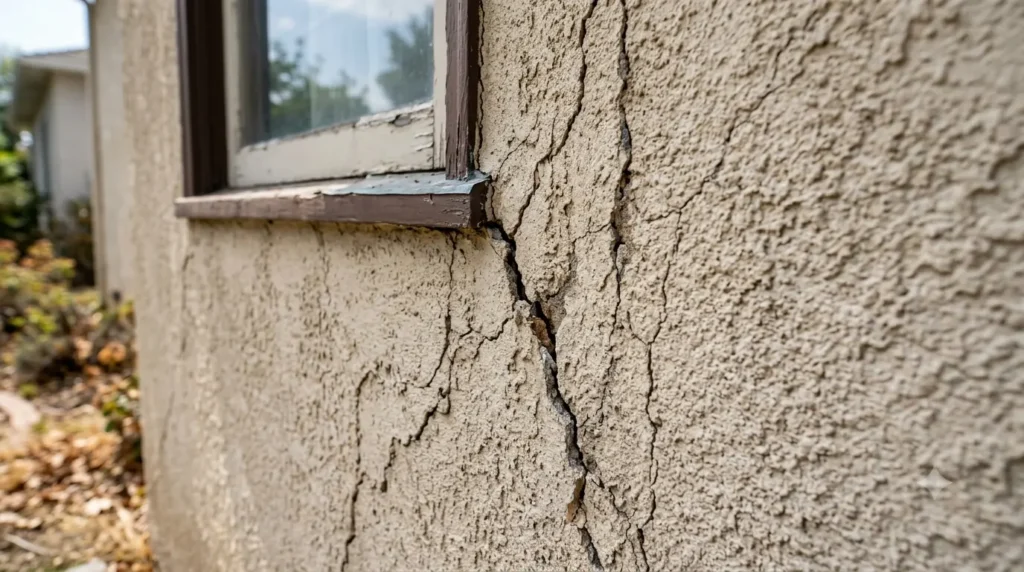
Hairline cracks are fairly common in stucco, especially as a home settles over time. Seasonal temperature changes can also cause building materials to expand and contract, creating small surface cracks.
Most hairline cracks aren’t a reason to panic. The concern begins when they become wider, spread across the wall, or keep returning after they’ve already been repaired.
Pay close attention to cracks around windows, doors, rooflines, and corners of the home. These areas experience more movement than large sections of wall and are often the first places where moisture can enter.
It’s also important to watch how the crack changes over time. A crack that’s noticeably longer or wider than it was a few months ago deserves more attention than one that has remained the same for years.
Many homeowners try to cover cracks with paint or exterior caulk. While that may improve the appearance for a while, it rarely fixes the underlying cause. If moisture is entering behind the stucco or the wall continues to shift, the crack will likely return.
Another sign to watch for is multiple cracks appearing in the same area. Rather than treating each crack individually, it’s worth investigating whether they’re connected to a larger issue, such as water intrusion or movement within the wall system.
How to Handle It
Take clear photos of the affected area when you first notice the crack. Comparing photos over several weeks or months makes it easier to see whether it’s growing.
If the crack continues to expand or appears alongside water stains, schedule a professional stucco inspection. An experienced stucco repair contractor can determine whether the crack only needs a surface repair or points to a deeper moisture problem.
Need Professional Stucco Repair or Remediation?
Get expert stucco inspection, repair, and remediation services you can trust. Serving homeowners with quality workmanship and long-lasting results.
Get a Free Consultation
Need Professional Stucco Repair or Remediation?
Get expert stucco inspection, repair, and remediation services you can trust. Serving homeowners with quality workmanship and long-lasting results.
Get a Free Consultation2. Water Stains or Discoloration
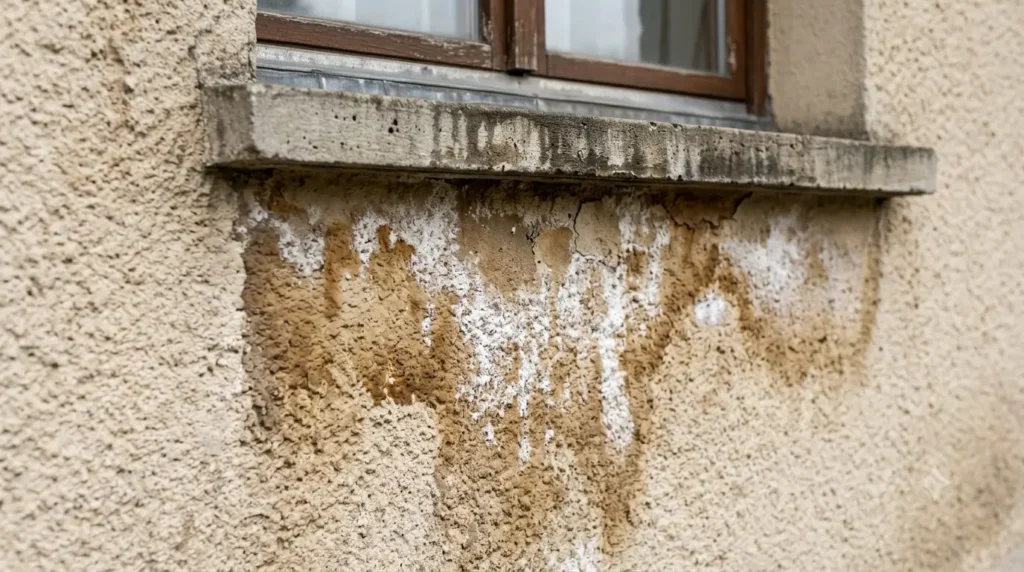
Not every stain on stucco is caused by dirt or age. Brown streaks, dark patches, or white mineral deposits often indicate that moisture is moving through the wall instead of staying outside where it belongs.
One of the biggest challenges with water intrusion is that the stain isn’t always located where the leak began. Water can travel behind the stucco before becoming visible, making the source difficult to identify without a proper inspection.
If discoloration becomes darker after rainfall or continues to spread over time, it shouldn’t be ignored. These changes often suggest that moisture is repeatedly entering the same area.
Cleaning or repainting the surface may improve its appearance, but it won’t solve the underlying problem if water is still getting behind the stucco. The source of the leak must be identified before any cosmetic repairs are made. When moisture has already damaged the materials behind the exterior, complete stucco remediation and restoration may be required.
How to Handle It
Pay attention to when the stains appear and whether they return after cleaning. If the discoloration becomes more noticeable after rain or keeps spreading, have the area inspected by an experienced stucco repair contractor before hidden moisture causes more extensive damage.
3. Bubbling or Loose Stucco
Stucco should sit firmly against the wall. If you notice sections that look swollen, uneven, or feel hollow when tapped, moisture may have weakened the bond between the stucco and the surface beneath it.
This usually happens when water gets behind the exterior through cracks, failed sealant, or damaged flashing. As moisture becomes trapped, the stucco can begin separating from the wall, creating visible bulges or soft spots.
Ignoring loose stucco can allow the problem to spread. What starts as a small repair may eventually require replacing a much larger section if water continues to penetrate the wall.
How to Handle It
Avoid removing or pressing on loose areas yourself. A professional inspection can identify where the moisture is coming from and determine whether the damage is limited to the stucco or has affected the wall behind it.
4. Chipped or Crumbling Stucco
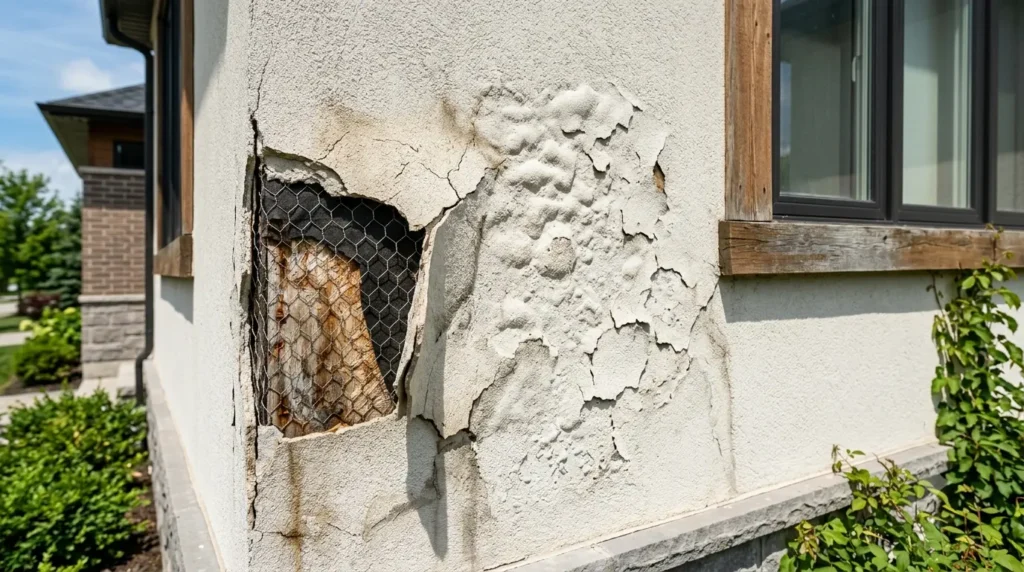
Stucco is durable, but it’s not indestructible. Tree branches, lawn equipment, hail, or accidental impacts can chip the surface and expose the layers underneath.
Even small chips should be repaired promptly. Once the protective surface is broken, water can enter and gradually weaken the surrounding area.
Crumbling edges or pieces that continue breaking away often indicate that moisture has already affected the bond between the stucco and the wall. Repairing the visible damage without addressing the underlying cause usually leads to recurring problems.
How to Handle It
Inspect chipped areas after storms or accidental impacts. If the damage continues to spread or exposes the underlying material, have it repaired before moisture causes additional deterioration.
5. Mold, Mildew, or Recurring Moisture
Mold and mildew are often signs that moisture is staying where it shouldn’t. While shaded areas naturally remain damp for longer, repeated mold growth usually points to an underlying water intrusion issue.
You might notice dark streaks, green patches, or black spots that return even after cleaning. These signs suggest that moisture is repeatedly entering the same section of the wall.
Left untreated, trapped moisture can lead to wood rot, damaged insulation, and mold growth inside the wall cavity. Addressing the source of the moisture is far more effective than repeatedly cleaning the surface.
How to Handle It
If mold or mildew keeps returning, schedule a professional stucco inspection. Moisture testing can determine whether the issue is limited to the exterior or if repairs are needed behind the stucco.
Frequently Asked Questions
How much does stucco repair cost?
The cost depends on the size of the damaged area and whether moisture has affected the wall behind the stucco. Minor repairs are usually much less expensive than projects involving hidden water damage, so it’s best to have the problem inspected early.
Can damaged stucco be repaired without replacing the entire wall?
Yes. Many stucco issues can be repaired by removing the damaged section, correcting the underlying problem, and applying new stucco that matches the existing finish. Full replacement is generally only necessary when moisture has caused significant damage behind the wall.
Are hairline cracks in stucco normal?
Yes. Small hairline cracks often develop as a home settles or responds to seasonal temperature changes. However, cracks that continue to grow, spread, or allow water inside should be professionally evaluated.
Can cracked stucco cause water damage?
Yes. Even small cracks can allow moisture to enter the wall system over time. If left untreated, that moisture may contribute to mold growth, wood rot, and damage to structural materials.
Final Thoughts
Small stucco problems rarely improve on their own. Cracks, stains, loose sections, and recurring moisture are often early warning signs that the exterior is no longer protecting your home as it should. The good news is that many stucco issues can be repaired before they become major restoration projects. Regular inspections and timely repairs can help extend the life of your stucco while protecting your home from costly moisture damage.
If you’ve noticed any of the warning signs discussed in this guide, contact Alston Stucco to schedule an inspection. A professional assessment can identify the cause and recommend the right repair before the problem becomes more expensive.